The short answer
- Promotional suppliers quote product plus a separate imprint charge
- Setup charges apply per colour and per position, as in apparel
- Bags vary enormously — material and construction change everything
- Freight, proofs and rush charges erode margin quietly
- Quote from the landed cost, not the catalogue price
Apparel decorators are asked for bags, bottles, pens and mugs constantly, usually alongside a shirt order. It is worthwhile work with a different cost structure, and pricing it like a garment produces margins that look fine and are not.
A different market
| Apparel | Promotional | |
|---|---|---|
| You buy | Blanks, decorate yourself | Often decorated by the supplier |
| Pricing | Blank plus your decoration | Product plus imprint charge |
| Setup | Your screens | Their charge, per colour |
| Lead time | Your schedule | Theirs, plus freight |
| Minimums | Yours to set | Set by the supplier |
| Proofs | Yours | Sometimes chargeable |
The control difference is the important one. On apparel you decide the schedule; on promotional goods you are quoting a supplier's lead time and inheriting their delays, which is why building lead times into what you promise matters even more here.
On promotional goods you are reselling somebody else's production. Price it as a service, and quote their timeline honestly.
How supplier pricing works
The typical structure
- Product price at a quantity break
- Imprint charge per piece, per colour, per position
- A setup or screen charge per colour
- Freight, often not included
- Proof charges on some items
- Rush charges where the date is tight
- Occasionally a less-than-minimum charge
Adding those up is the whole skill. A pen at an attractive catalogue price with a per-colour imprint, a setup and freight arrives at a landed cost meaningfully above the headline, and quoting from the headline is how promotional work loses money.
Build the total before quoting, every time. It takes a few minutes and it is the difference between a margin you chose and one you discovered afterwards.
Decorating them yourself
Some promotional items can be decorated in your own shop, which changes the economics substantially.
| Item | In-house? |
|---|---|
| Cotton tote bags | Yes — screen, DTF or embroidery |
| Drawstring bags | Usually |
| Aprons and tea towels | Yes |
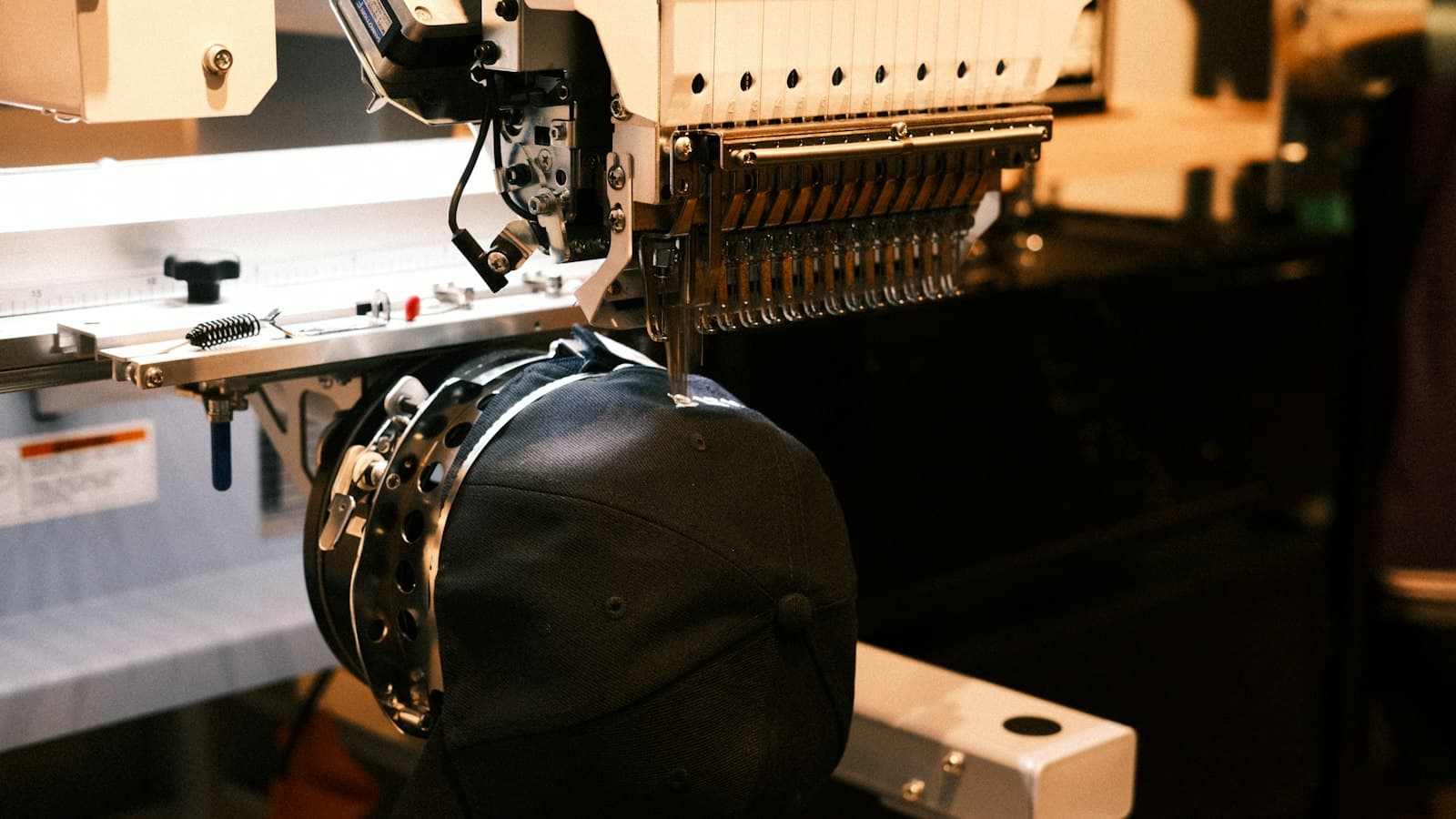
| Caps and beanies | Yes, with the right frames |
| Bottles, mugs, hard goods | Only with specific equipment |
| Pens and small items | Buy decorated |
Textile promotional goods belong in your shop. A tote bag is a flat cotton item with a print area, and decorating it uses equipment you already own — so the margin is yours rather than the supplier's.
Hard goods generally do not, unless you have committed to sublimation or pad printing deliberately. Buying those decorated is usually the right answer.
Bags specifically
Bags are the most requested non-garment item and the one where quality varies most.
What changes the price and the print
- Fabric weight — light bags print poorly and feel cheap
- Cotton, canvas, jute, polyester or non-woven
- Handle length, and whether short or long is wanted
- Gusset or flat
- Whether seams intrude into the print area
- Whether the bag lies flat on a platen
Very light non-woven bags are cheap and print badly, and a customer choosing on price alone will be disappointed by both the print and the bag. Showing a sample of a mid-weight cotton alternative usually sells it.
Check the print area against the seams before quoting. A design that fits the stated area but crosses a seam or a handle attachment will not print cleanly, and that constraint belongs in the conversation early — the same check as designing for the print area.
Hidden costs
Frequently forgotten
- Freight, sometimes substantial on bulky items
- Proof charges and pre-production samples
- Overrun and underrun tolerances — you may be billed for more than ordered
- Rush charges to hit a date
- Split shipment charges
- Your own time coordinating the order
Overrun and underrun tolerances catch people out. Some promotional suppliers reserve the right to ship slightly over or under and bill accordingly, so a quote based on an exact quantity can be wrong on arrival — check the terms on anything large.
Margin expectations
Promotional goods are a resale business, and resale margins are thinner than decoration margins. That is normal, and it should be priced knowingly rather than discovered.
Where the margin actually is
- Items you decorate yourself — best margin
- Larger orders, where supplier breaks help
- Repeat programmes with no new setup
- Bundled orders — apparel plus promotional together
- Your coordination, priced as a service
Keep the range you offer narrow rather than presenting a catalogue of thousands of items. A short list of products you have actually seen and can vouch for sells better than an overwhelming choice, and it keeps you from recommending something that turns out to be poor.
Bundling is the strongest commercial case. Being the single supplier for a customer's shirts, caps and bags is worth more than the individual margins suggest, because it protects the whole account from a competitor with a broader range — which is part of sourcing beyond apparel.
Quoting it
On the quote
- Item named precisely, with the supplier's code
- Imprint colours and positions
- Setup, listed separately
- Lead time including freight, not just production
- Any tolerance on quantity
- Validity, since promotional pricing moves
Quote lead times conservatively. You are dependent on a third party's schedule and a carrier, and promotional orders are frequently tied to an event date that cannot move — so build in more slack than an in-house job would need.
Order a pre-production sample on anything large or unfamiliar. Promotional decoration is done by somebody you cannot watch, on a substrate you may not have seen, and a sample approved before the run is the only real check available to you.
Allow for the proof cycle in the timeline as well. Most promotional suppliers issue a virtual proof and will not start production until it is approved, so a day lost approving it is a day lost on the delivery date.
Keep the supplier and item details on the order record so a repeat is straightforward. Promotional reorders are common and easy money when the codes, artwork and imprint details are on file, and expensive to reconstruct when they are not. The rest of the pricing archive assumes the landed cost was calculated before the price was quoted.