The short answer
- Sublimation dyes the fibre — there is no ink layer and no hand feel at all
- It works on polyester only, and on white or light substrates only
- Those two limits are absolute; no technique works around them
- Kit: a sublimation printer, transfer paper and a press with even heat
- Its natural home is jerseys, all-over designs and coated hard goods
Sublimation is the odd process in decoration. It produces the most durable result available — the print cannot crack, peel or fade in the way ink on fabric does — and it comes with two constraints so absolute that they determine whether you can take a job at all.
How it works
Sublimation ink is printed onto transfer paper, then heat and pressure turn it directly into gas, which bonds with polyester fibres and returns to solid inside them. The dye becomes part of the fibre rather than sitting on it.
The consequences follow from that. There is no hand feel whatsoever — you cannot feel the print because there is nothing on the surface. It cannot crack or peel, because there is no layer to separate. And it does not affect breathability, which is why it dominates performance sportswear.
It also means the process is irreversible and unforgiving. Once the dye is in the fibre it is there; a misplaced transfer is a ruined garment rather than a reprint.
The two hard limits
Polyester only. The chemistry bonds with polyester. On cotton there is nothing for the dye to bond with, so it washes out. Blends work partially and proportionally — a 50/50 gives a faded result because only half the fibres take the dye, which is sometimes a deliberate vintage effect and is usually a disappointment.
White or light only. Sublimation dye is transparent and adds colour to what is beneath. There is no white ink, so anything white in your design is simply the garment showing through. On a coloured garment the design shifts toward that colour; on black, nothing usable appears at all.
| Substrate | Result |
|---|---|
| 100% polyester, white | Full colour, ideal |
| 100% polyester, pale | Works; colours shift slightly |
| Poly/cotton blend | Faded in proportion to the cotton |
| 100% cotton | Washes out — will not work |
| Dark polyester | Effectively invisible |
| Coated hard goods | Works — the coating is the receiver |
Neither limit has a workaround. A customer wanting a design on black cotton is not a sublimation customer, and the honest answer is another process rather than an attempt.
Sublimation has no white ink. Whatever is white in your design is the garment.
The equipment
What a sublimation setup needs
- A sublimation printer — dedicated, since the inks cannot be swapped in and out
- Transfer paper matched to the ink and substrate
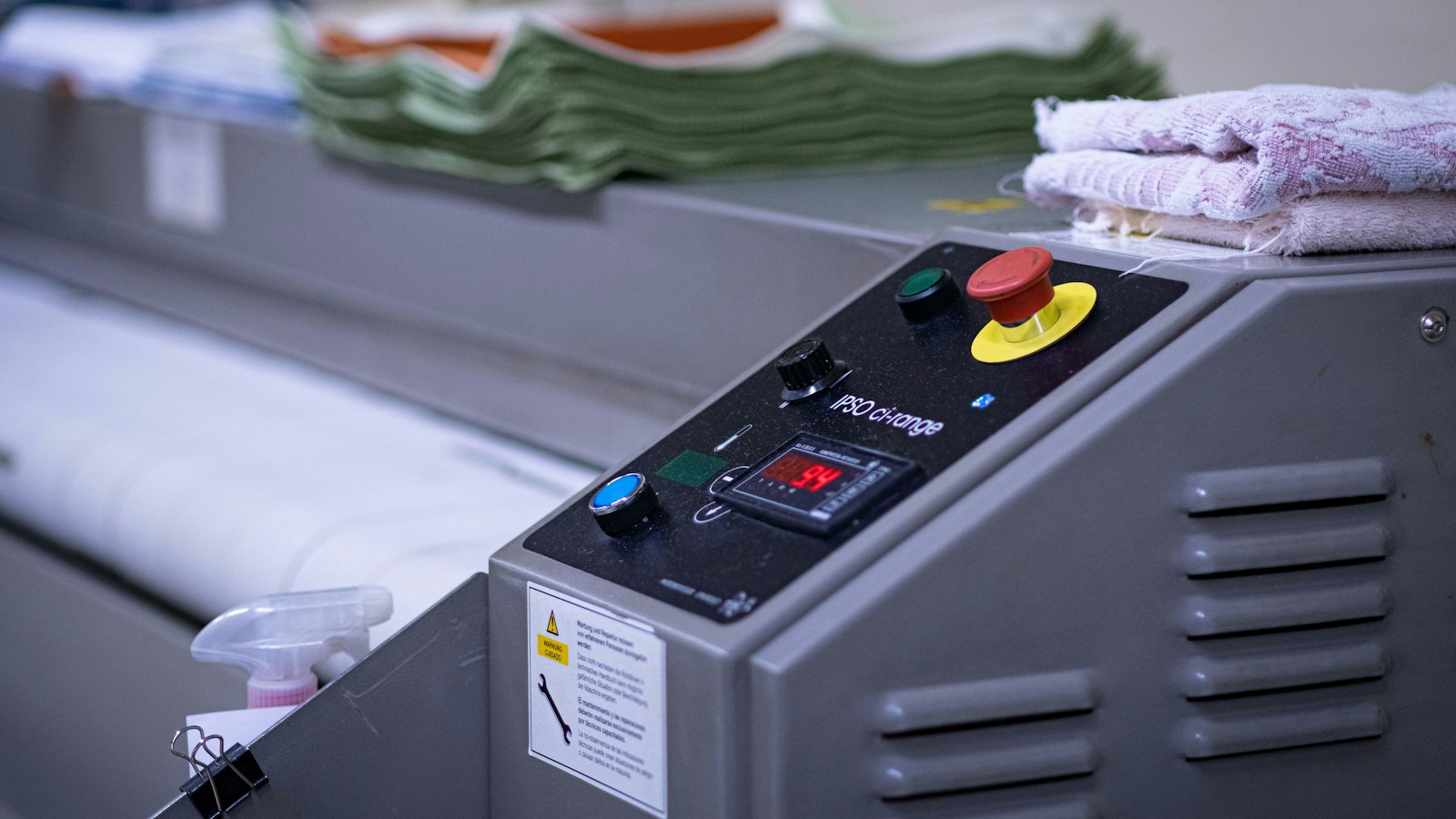
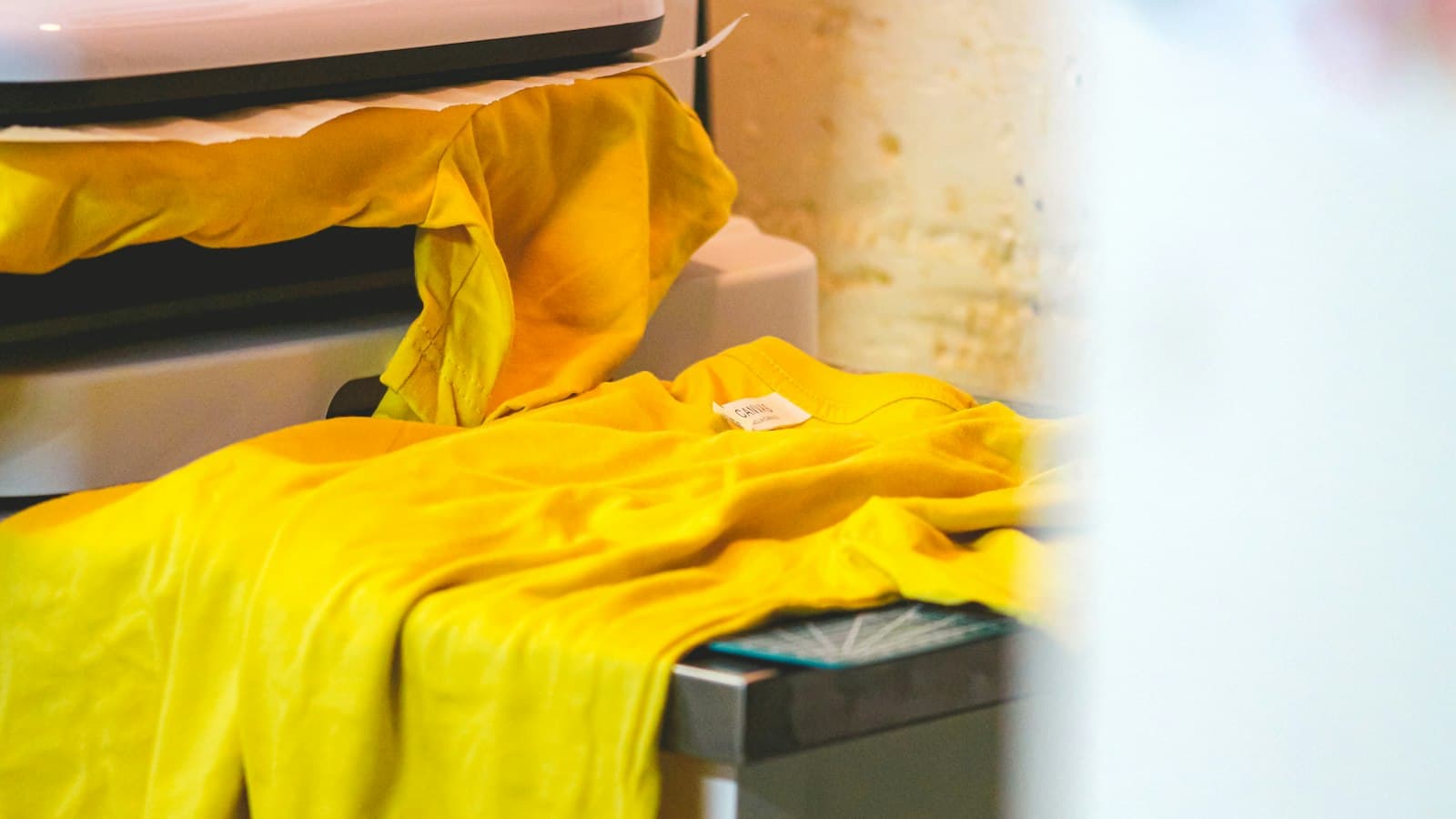
- A heat press with genuinely even heat and pressure
- Heat tape to stop the transfer shifting — ghosting is unrecoverable
- Protective paper to keep dye off the platen
- For hard goods, the right jig or wrap per item
The press matters more here than in any other process. Sublimation needs consistent temperature across the whole platen for the full dwell, and a press cooler at one corner produces a design that is faint there — which cannot be fixed afterwards.
Check platen temperature at all four corners before a run, not just the panel reading. That is on the weekly maintenance list for good reason, and it matters doubly for a process with no second chances.
Ghosting is the other characteristic failure. If the transfer moves even slightly as the press opens, a faint double image appears — so heat tape is not optional, and lifting the press cleanly is a technique worth training.
All-over printing
The capability nothing else offers. Because the dye becomes the fabric, sublimation can cover a whole garment edge to edge with no hand feel and no seam issues.
Done properly it is not a whole-garment press at all. The design is printed onto the cut panels before assembly, then the garment is sewn — which is why all-over sublimated jerseys have designs continuing across seams.
That has a practical consequence for artwork: designs must be laid out against the pattern pieces rather than on a flat mock-up, and a design that looks right on a rectangle can be wrong once cut. It is a specialist workflow, usually run through a supplier who sews as well as prints, and worth knowing about before promising a customer their design will wrap.
Hard goods
A substantial part of the market and easy to overlook. Mugs, tumblers, coasters, phone cases, plaques, mouse mats and metal panels all sublimate — provided they carry a polymer coating designed for it.
An uncoated mug does not work. The coating is the receiver, which is why sublimation blanks are sold specifically as sublimation blanks and cost more than the plain equivalent.
| Item | Needs |
|---|---|
| Mugs and tumblers | A mug press or wrap and oven |
| Coasters, tiles | Flat press |
| Phone cases | Item-specific jig |
| Metal and acrylic panels | Flat press, coated stock |
| Caps | Cap press, and a poly cap |
Each shape needs its own jig or press attachment, and that is where the cost accumulates rather than in the printer. A shop offering a wide range of hard goods owns a cupboard of jigs, and each one should earn its place through actual orders.
Where it fits
Sublimation is not a general-purpose process and shops that treat it as one are disappointed. Its natural territory is narrow and valuable.
| Job | Sublimation |
|---|---|
| Team jerseys, all-over designs | The right answer |
| Performance wear, no hand feel | The right answer |
| Coated mugs and drinkware | The right answer |
| Photo panels and awards | The right answer |
| Cotton tees | Wrong process entirely |
| Dark garments | Wrong process entirely |
| Small runs on mixed fabrics | DTF handles this better |
Adding it makes sense when you already sell into sports, corporate gifting or awards, where the substrates are polyester and coated goods anyway. It makes much less sense as a general capability, because the constraints mean it will decline most of what walks through the door.
Cost it as its own line rather than folding it into general capacity — printer, press, jigs, paper and the higher price of coated blanks. That is the same fixed-plus-variable arithmetic as any equipment decision, and the blank cost matters more here than usual. The rest of the equipment archive assumes you checked the substrate before quoting.