The short answer
- Digital printers need daily attention — nozzle checks and ink agitation are not optional
- Check dryer temperature at the belt weekly; the panel reading is not evidence
- Reset heat press pressure whenever garment thickness changes
- Most breakdowns announce themselves first as a small, ignorable symptom
- A schedule nobody owns is a schedule nobody does
Maintenance is the work that produces nothing visible and prevents the most expensive thing that can happen in a decorating shop: a machine stopping in the middle of a week with committed delivery dates. It is skipped for exactly that reason — the benefit is invisible and the cost of skipping arrives later.
The economics are not close. A morning of downtime on a busy week costs more than a year of the checks that would have prevented it.
Why do maintenance schedules fail?
Three reasons, all fixable. Nobody owns it, so it happens when someone remembers. It is not scheduled, so it competes with production and loses. And it is not recorded, so nobody knows whether it was done or when.
The fix is unglamorous: name a person, put it on the calendar as a job, and keep a log. A maintenance schedule that lives in a folder is decoration; one that appears on the production board alongside the jobs is work.
Treating it as a scheduled job also means it can be planned around rather than colliding with a deadline — which is exactly what production scheduling is for. Machine time blocked for maintenance is capacity you knew about; a machine down unexpectedly is capacity you did not.
Daily
Short, and the digital equipment is where it genuinely matters.
Every day
- DTG/DTF: agitate white and colour ink, run a nozzle check, run the cleaning cycle
- Heat press: wipe the platen, check the cover for residue
- Dryer: clear lint from the belt and around the elements
- Press: wipe pallets, check adhesive, clear ink from screens in use
- Embroidery: clear the bobbin case and hook area, oil per the manual
- Extraction: confirm it is actually running
The DTG line is the one that costs real money if skipped. White ink settles, and a printhead left without circulation clogs — replacement heads are a large share of the machine's value, which is why an idle DTG printer is a liability rather than a dormant asset. Daily agitation and a nozzle check take a few minutes and protect the most expensive component in the shop.
Embroidery oiling is the other one with a hard consequence. A hook run dry seizes, and the repair is a technician visit plus days of downtime.
Weekly
This is where the checks that catch drift belong — the slow changes that produce faults nobody connects to a cause.
Every week
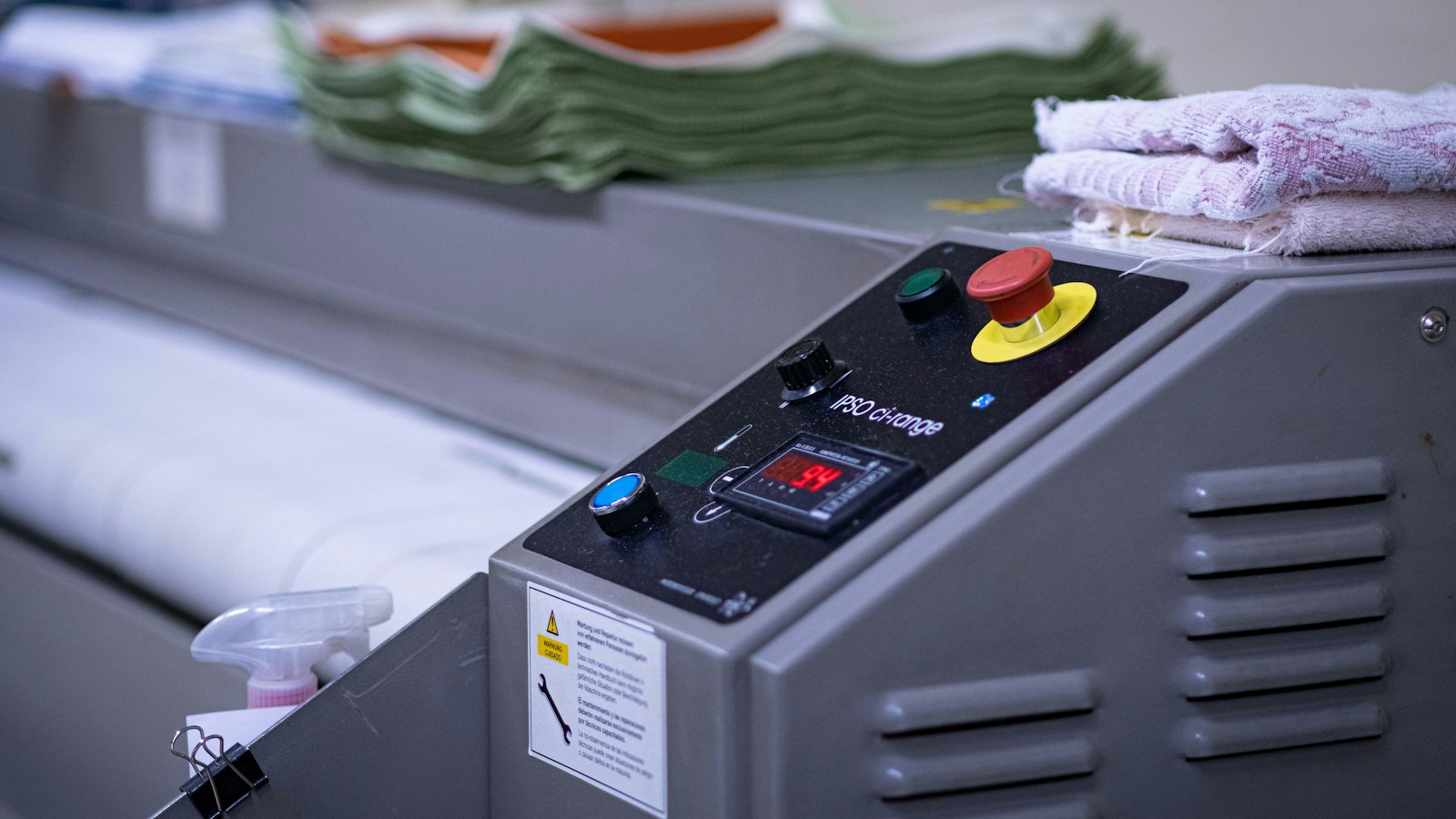
- Dryer: measure surface temperature at the belt, across its width, not on the panel
- Heat press: check platen temperature at centre and all four corners
- Press: check registration holds across a short run; look for play in arms and bearings
- Air: drain the compressor, listen for leaks
- Exposure: log lamp hours if you run metal halide
- Screens: inspect the rack for pinholes and damaged mesh before they reach a job
The temperature checks are the highest-value items on the whole schedule. A dryer or press that has drifted cool produces work that looks perfect and fails in the wash at the customer. Nothing announces this — the only way to know is to measure, and it takes two minutes.
Almost every quality complaint you will receive was measurable in your shop a week earlier.
Monthly
Deeper checks, and the point at which you look at wear rather than function.
| Machine | Check |
|---|---|
| Press | All pivots and bearings; micro-registration through full travel |
| Dryer | Belt tracking and condition; element output individually |
| Heat press | Pressure adjuster through its range; platen parallelism |
| Embroidery | Timing check; needle plate and thread path for burrs |
| DTG/DTF | Deep clean per manual; wiper and cap condition |
| Compressor | Filters, oil where applicable, tank inspection |
| Washout | Filtration and drainage — a blocked trap becomes urgent fast |
The embroidery timing check is worth singling out. Thread breaks clustering in the same area of a design are usually read as a file problem, and if the file has been running cleanly for months it is far more likely to be timing drifting. Checking monthly separates the two before anyone re-digitises a file that was fine.
Annual
The things that need a technician, a shutdown or a proper inspection.
Once a year
- Professional service on press, dryer and embroidery machines
- Electrical inspection — a shop with a dryer and a compressor warrants it
- Extraction and ventilation properly cleaned and tested
- Replace heat press cover and pad rather than waiting for failure
- Full calibration of every temperature-critical machine
- Review your spares holding against what has actually failed
That last item is the one that converts a two-day outage into a one-hour one. After a year you know which parts fail in your shop — belts, elements, squeegees, hooks, a particular sensor — and holding those on a shelf costs little against the downtime they prevent. Ask your dealer for lead times on the common failures and stock anything with a long one.
Making it stick
Four things, and they matter more than the list itself.
Name an owner. One person, not "the team". They do not have to do every task, but they are accountable for it happening.
Schedule it as work. Blocked time on the board, not a gap to be filled if the day allows. It will never be filled if it competes with a delivery date.
Log it. Date, task, who, and anything noticed. The log is what turns "the dryer feels off" into "the left element has been reading low for three weeks", which is a diagnosis rather than a hunch.
Act on small symptoms. Almost every breakdown announces itself first — a noise, a slight temperature drift, a clean-up cycle that takes longer, thread breaks that were not there last month. The cost of investigating early is minutes; the cost of waiting is a week of rescheduled jobs.
None of this is difficult and all of it is boring, which is exactly why it gets skipped in the shops that can least afford the downtime. The rest of the equipment archive assumes your machines are checked on a schedule rather than when something goes wrong.