The short answer
- Most embroidery faults are hooping or backing, not digitising
- The fabric should be flat and held, never stretched
- Cut-away backing for knits; tear-away for stable wovens
- A topping stops stitches sinking into pile fabrics
- Hooping is the bottleneck on any multi-head machine
When embroidery comes off the machine puckered, misaligned or distorted, the instinct is to blame the file or the machine. Both are usually innocent. The garment was hooped badly, or the wrong stabiliser was used, and everything downstream inherited the problem.
Why hooping matters
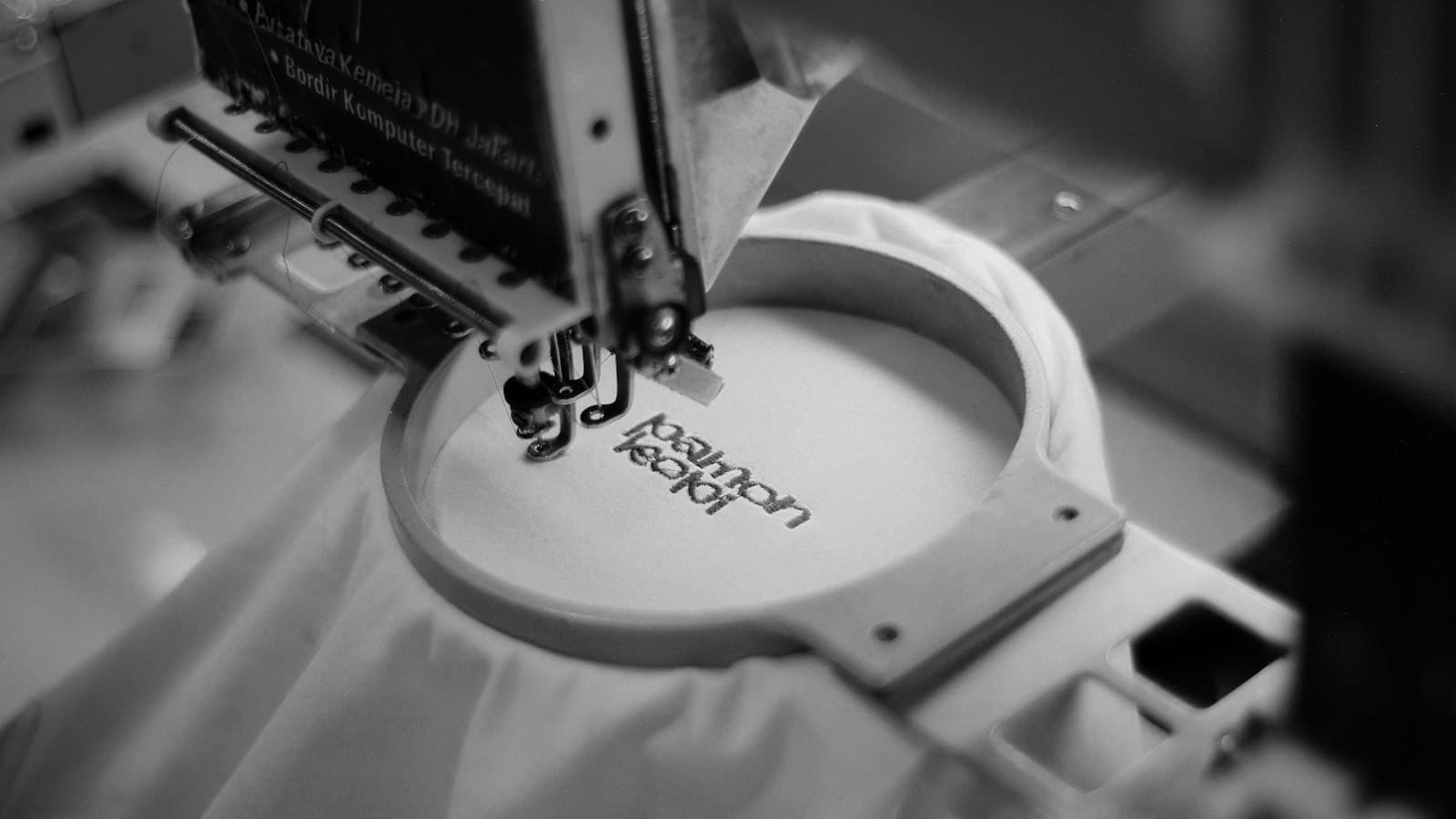
An embroidery machine assumes the fabric under the needle is stable and flat. Every stitch pulls, and thousands of them will move any fabric that is free to move.
What bad hooping produces
- Puckering around the design once it is unhooped
- Registration drift — outlines missing their fills
- Distorted lettering, particularly on knits
- Hoop burn: a visible ring in the fabric
- Thread breaks from uneven tension
- The design ending up crooked
Puckering is the clearest signal, and it is almost always fabric that was stretched in the hoop. Stitched while stretched, the fabric relaxes when released and the stitches have nowhere to go.
Hold the fabric. Do not stretch it. Nearly every hooping fault is a version of that one mistake.
Hooping properly
The sequence
- Set the hoop tension to the fabric before inserting the garment
- Lay the garment and backing flat; do not pull them taut
- Press the inner hoop down evenly rather than at one corner
- Check the grain is straight, not skewed
- Confirm the placement against a marked reference
- Clear the rest of the garment from the sewing field
Tension set on the hoop rather than by pulling the fabric is the technique that separates good hooping from bad. If the hoop is correctly adjusted, the garment goes in flat and stays flat with no stretching at all.
Placement should be measured, not judged. A marking tool or a placement template removes the variation between operators and between the first garment and the fiftieth — which is what customers actually notice across a run.
Choosing a hoop
Use the smallest hoop the design fits into. A larger hoop leaves more unsupported fabric inside the frame, and unsupported fabric moves.
| Situation | Hoop |
|---|---|
| Left chest logo | Small round or square |
| Full front or back | Large — support the fabric well |
| Caps | Dedicated cap frame, no substitute |
| Sleeves and cuffs | Small or specialist tubular |
| Pockets and awkward areas | Clamp or magnetic frame |
| Thick outerwear | Magnetic — kinder to the fabric |
Magnetic hoops deserve consideration on any shop doing varied garment weights. They adjust to thickness without adjustment, reduce hoop burn on delicate fabrics, and cut hooping time noticeably — which matters most on a multi-head machine.
Backing types
| Backing | Use on | Note |
|---|---|---|
| Cut-away | Knits, tees, polos, fleece | Permanent support; trim after |
| Tear-away | Stable wovens, caps | No lasting support |
| Wash-away | Sheer fabrics, freestanding work | Dissolves entirely |
| Heat-away | Where washing is unsuitable | Specialist |
| Poly mesh | Light knits, visible-back garments | Soft and less visible |
| Adhesive-backed | Hard-to-hoop items | Floating technique |
The most common mistake is tear-away on a knit. Tear-away supports during stitching and gives no lasting support afterwards, so a tee embroidered on tear-away looks fine leaving the machine and puckers after washing.
Match the weight to the design as well as the fabric. A dense left chest on a light polo needs more support than a small monogram, and using one backing for everything guarantees it is wrong somewhere — the same reasoning as matching the design to the method.
Toppings
A topping is a film laid on top of the fabric before stitching. It stops stitches sinking into a textured or pile surface.
Use one on
- Towelling and terry
- Fleece and sherpa
- Piqué polos with small lettering
- Waffle and heavily textured knits
- Anywhere small text disappears into the pile
Without one, the smallest elements sink below the surface and the design looks patchy — the letters are stitched, they are simply not visible, which is the same practical failure as type below the minimum size.
Difficult garments
Common problems and the usual answer
- Too thick to hoop — float on adhesive backing, or use magnetic
- Delicate fabric marking — magnetic hoop, lighter tension
- Pockets and seams in the field — clamp frame
- Very stretchy performance fabric — cut-away plus careful hooping
- Waterproof outerwear — avoid perforating; consider a patch instead
- Small items like cuffs — tubular or specialist frames
Floating is the technique worth learning properly. The backing is hooped alone and the garment is held to it with adhesive or basting, which allows items that could never be hooped conventionally.
For waterproof shells, embroidery makes needle holes through the membrane. An applied patch is often the better recommendation, and saying so protects both the garment and your reputation.
Speeding it up
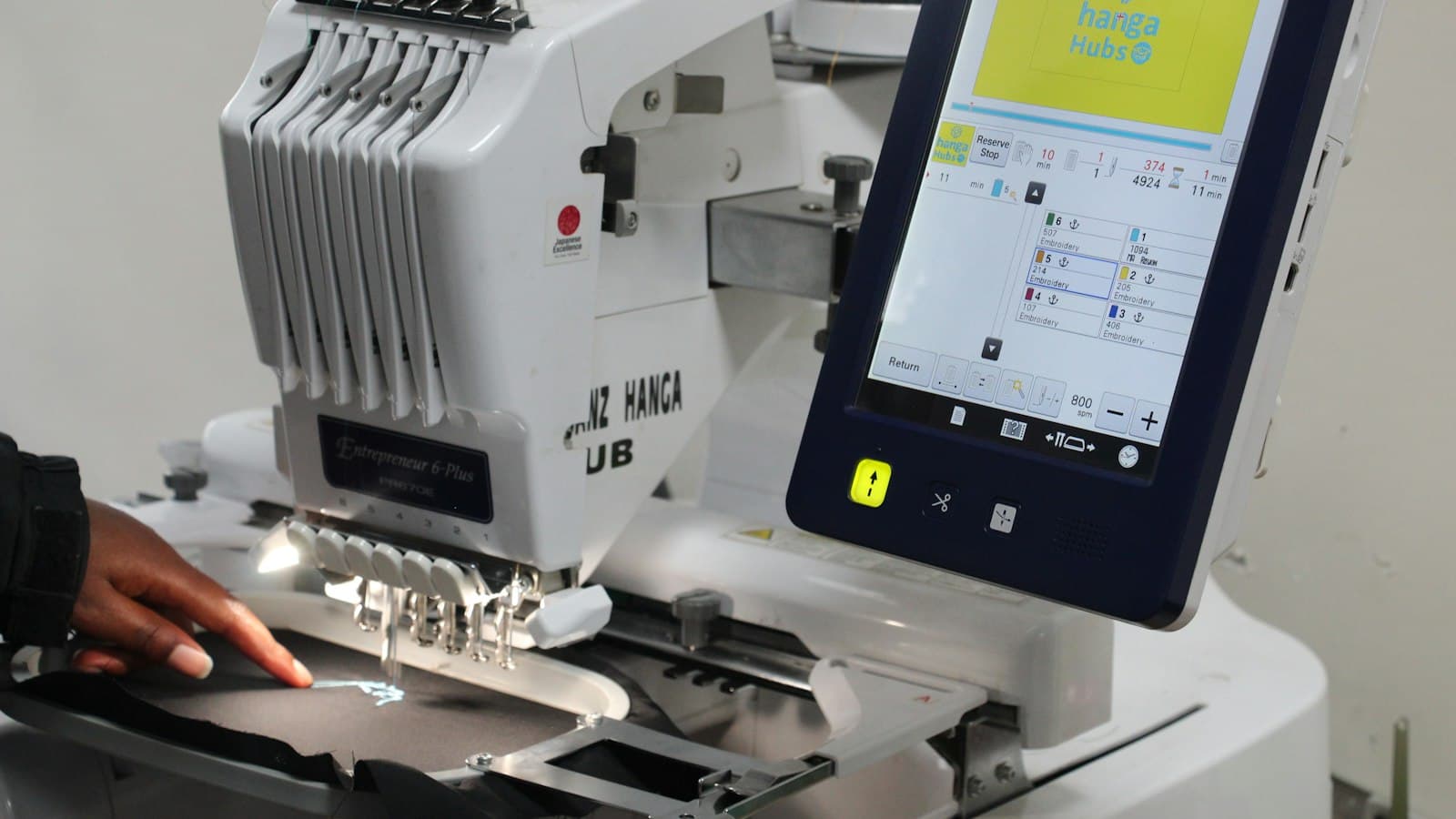
On a multi-head machine, hooping is the constraint. The machine runs unattended; the operator hoops continuously, and output is limited by how fast that happens.
Where the time goes back
- Enough hoops to hoop ahead while the machine runs
- Magnetic or quick-release hoops
- A hooping station at working height with backing to hand
- Placement templates instead of measuring each time
- Backing pre-cut to size in batches
- Garments pre-sorted by size before hooping starts
Owning more hoops than heads is the cheapest capacity increase available on an embroidery machine. An operator who must wait for a hoop to come off before preparing the next garment is idle for part of every cycle, and that idle time is the whole difference between a machine that pays and one that nearly does.
Train hooping deliberately rather than by demonstration. It looks simple, which is exactly why it is learned badly — an operator who was shown once and left to it will develop a habit of stretching the fabric, and that habit shows up in every garment they hoop until somebody corrects it.
Record what worked for each garment style against the job so it is not rediscovered each time. Which backing, which hoop, which topping — noted in the job record rather than in one operator's memory — is what makes the second run of a garment straightforward for whoever is on shift. The rest of the equipment archive assumes hooping was checked before the file was blamed.