The short answer
- Small orders are unprofitable because of setup, not size
- Group jobs sharing a colour, a garment or a method
- DTF gang sheets are the clearest case — many jobs, one sheet
- Run batches on fixed days so customers know the rhythm
- Keep orders physically separate throughout, or you gain nothing
A twelve-piece order is not unprofitable because twelve is a small number. It is unprofitable because it carries the same setup as a two-hundred-piece order, and the setup is most of the work.
Batching attacks that directly: several small orders sharing one setup start to look like one medium order, which is a job that pays.
The small order problem
| Element | Scales with quantity? |
|---|---|
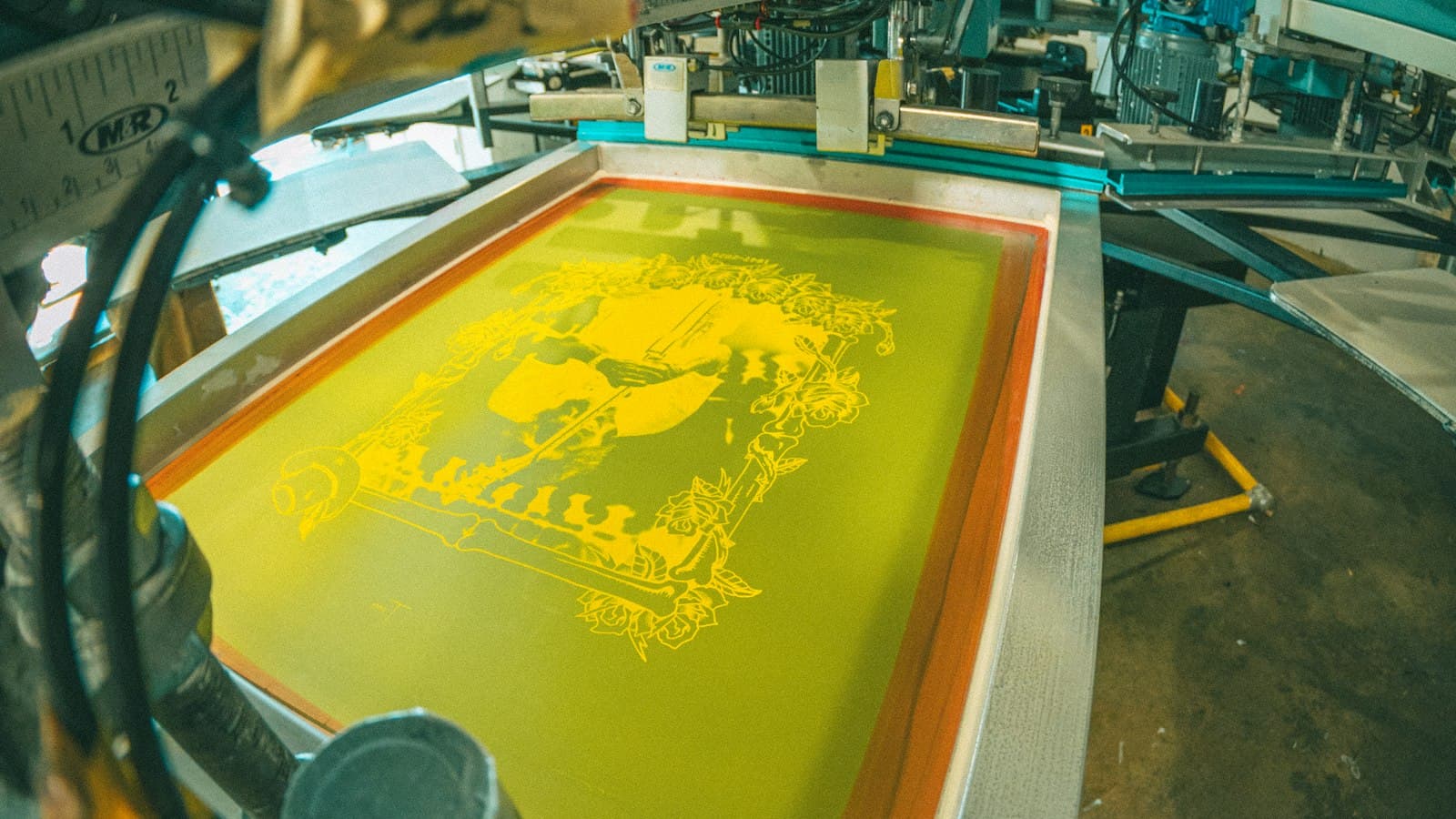
| Screen making | No |
| Ink mixing | No |
| Press setup and registration | No |
| Clean-down | No |
| Printing | Yes |
| Finishing | Yes |
Four of six do not scale. That is the entire economics of small orders, and it is why a minimum exists in most shops.
Batching does not make small orders bigger. It makes them share a setup, which is the part that was costing you.
What can be batched
Look for shared
- Ink colour — the biggest single saving
- Garment style and colour
- Decoration method and settings
- Mesh count and pallet size
- Placement and print size
- Transfer type, for DTF and vinyl
Ink colour is the most valuable because clean-down is the longest part of a changeover. Three black-print jobs run consecutively need one ink change instead of three, which on a busy day is an hour recovered — the sequencing case in cutting changeover time.
Garment type matters nearly as much, since a batch on one style needs no platen change and no adjustment between jobs.
Building a batch
A practical method
- Hold small orders in a queue rather than scheduling each
- Tag each with colour, garment and method
- Release when enough compatible work has accumulated
- Set a maximum wait — nothing sits past its date
- Sequence within the batch: light colours before dark
- Keep each order's garments physically separate throughout
The maximum wait is what makes this acceptable to customers. A batching queue with no limit becomes a way of being late; a queue with a stated ceiling is a scheduling method.
Where the queue lives in a system that can group by attribute, finding compatible jobs is a filter rather than a memory exercise — which is the difference between batching consistently and batching when somebody happens to notice.
Digital methods
DTF changes the arithmetic entirely, because the batching happens on the sheet rather than on the press.
Gang sheets
- Many designs from many orders on one sheet
- Cost falls sharply as the sheet fills
- No screens, no registration, no clean-down
- Each design cut out and pressed individually
- Different garments and colours in the same batch
The pressing is still per garment, so labour does not batch — but the expensive, setup-heavy part does. That is why DTF has become the standard answer for the small orders a screen minimum would otherwise turn away, as set out in DTF gang sheets.
DTG batches differently again: there is effectively no setup, so orders do not need grouping at all beyond sensible sequencing of pretreatment and garment colour.
Scheduling batches
Fixed days work best
- Nominate set days for small-order batches
- Publish the cut-off so customers know it
- Quote lead times against those days
- Keep the rest of the week for larger scheduled work
- Review whether the days still fit the volume
A published rhythm turns batching from an internal convenience into a service statement. "Small orders run Tuesdays and Fridays; order by Monday for Tuesday" is a clear promise, and customers plan around it happily.
It also stops small orders interrupting large ones. A shop that squeezes each small job in wherever it fits is paying a changeover for every one, which is exactly what batching was meant to avoid.
Keeping orders separate
The risk in batching is mixing orders, and a mixed batch costs more than the setup saved.
Controls that work
- Each order in its own labelled container throughout
- A job card travelling with each order, not with the batch
- Count per order at every stage, never per batch
- Finish and pack one order fully before starting the next
- A final check against each order individually
Finishing one order at a time is the discipline that prevents most errors. A batch folded together and separated afterwards is where garments end up in the wrong box, and the sorting takes longer than doing it in order would have.
Pricing around it
Batching is a production technique, not a discount. The customer still receives a small order with its own setup, artwork and handling, and the saving is yours for organising the work well.
Where it can affect price
- A lower minimum on batched days, published
- A cheaper rate for customers who accept the batch schedule
- Repeat customers whose jobs batch naturally
- Store orders that consolidate several individuals
Measure whether it is working. Compare the time spent on a batched group against what the same jobs would have taken individually, and the answer tells you whether the batching rules are drawn tightly enough — grouping jobs that share nothing but a day achieves very little.
Tell the customer what you are doing, in service terms rather than production terms. "We run small orders in batches, which keeps the price down" is a reason for a slightly longer lead time that people accept readily, and it is entirely true.
Review the queue regularly for jobs that never find a partner. A one-off in an unusual colour will wait indefinitely for a match that never comes, and it should be pulled out and run on its own rather than quietly becoming late.
Offering a lower minimum on batch days is the most useful of these. It converts enquiries you would have declined into work that fits your schedule, without touching the pricing on anything else — and those customers frequently return with larger orders later. The rest of the production archive assumes small orders were grouped rather than run one at a time.