The short answer
- Ask why it is being sold and listen to how the answer is given
- Never buy a press or embroidery machine you have not seen running
- Check parts availability before price — an unsupported machine is scrap with a footprint
- Budget for rigging, transport and installation; it is frequently thousands
- Digital printers are the highest-risk used purchase, because of the printhead
Used equipment is one of the genuine bargains available to a decorating shop. Presses and embroidery machines are built to run for decades, the technology moves slowly, and a machine at half price with fifteen years left in it is excellent value. It is also where shops acquire problems that cost more than the saving.
The difference between the two outcomes is almost entirely about what you check before handing over money.
Why is it being sold?
Ask directly, early, and pay attention to how the answer arrives rather than only to what it says. There are good reasons and bad ones, and sellers are usually honest if asked plainly.
Good reasons: upgrading to a larger machine, a change of business direction, a shop closing on the owner's terms, a machine surplus after consolidating two sites. These come with an easy, specific answer and usually a willingness to demonstrate.
Reasons to probe: vague answers, a machine that has been "in storage", a seller who cannot produce it running, or a business that has already ceased trading. None of those is automatically disqualifying — a genuinely good machine ends up in a liquidation sometimes — but each raises the amount of checking required.
A seller who is happy to run the machine for you is telling you something before they answer any question.
Inspecting a screen printing press
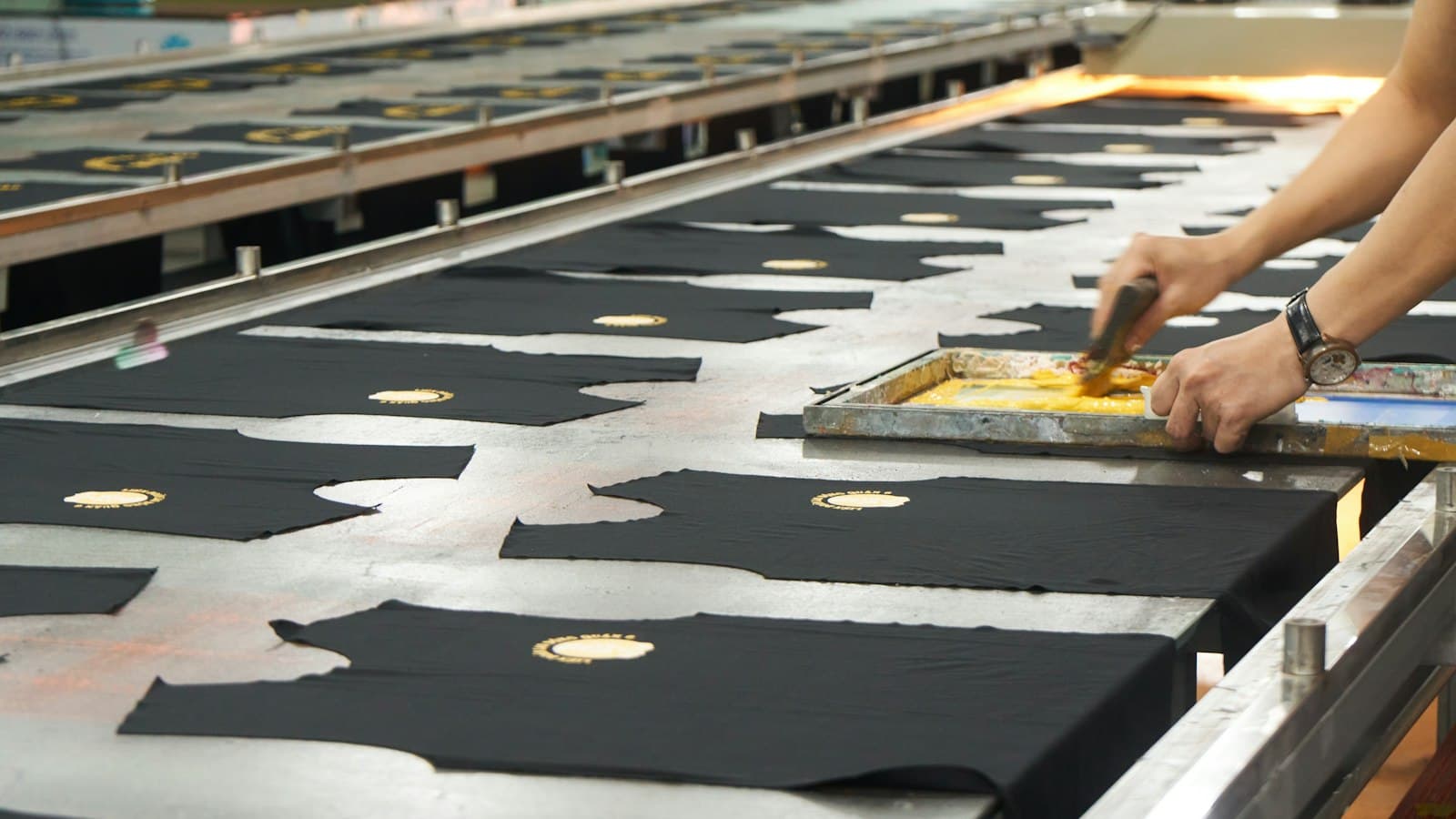
Presses are mechanically simple and age well, which is why they are the best used buy in the trade. What wears is the parts that move under load.
On a manual press
- Registration — set up a two-colour job and check it holds across twenty pulls
- Bearings and pivots — listen for play; a wobbling arm will never register
- Micro-registration — that every adjuster moves smoothly and holds position
- Platens — flat, undamaged, and that you can source replacements
- Frame — no cracks or amateur welding at stress points
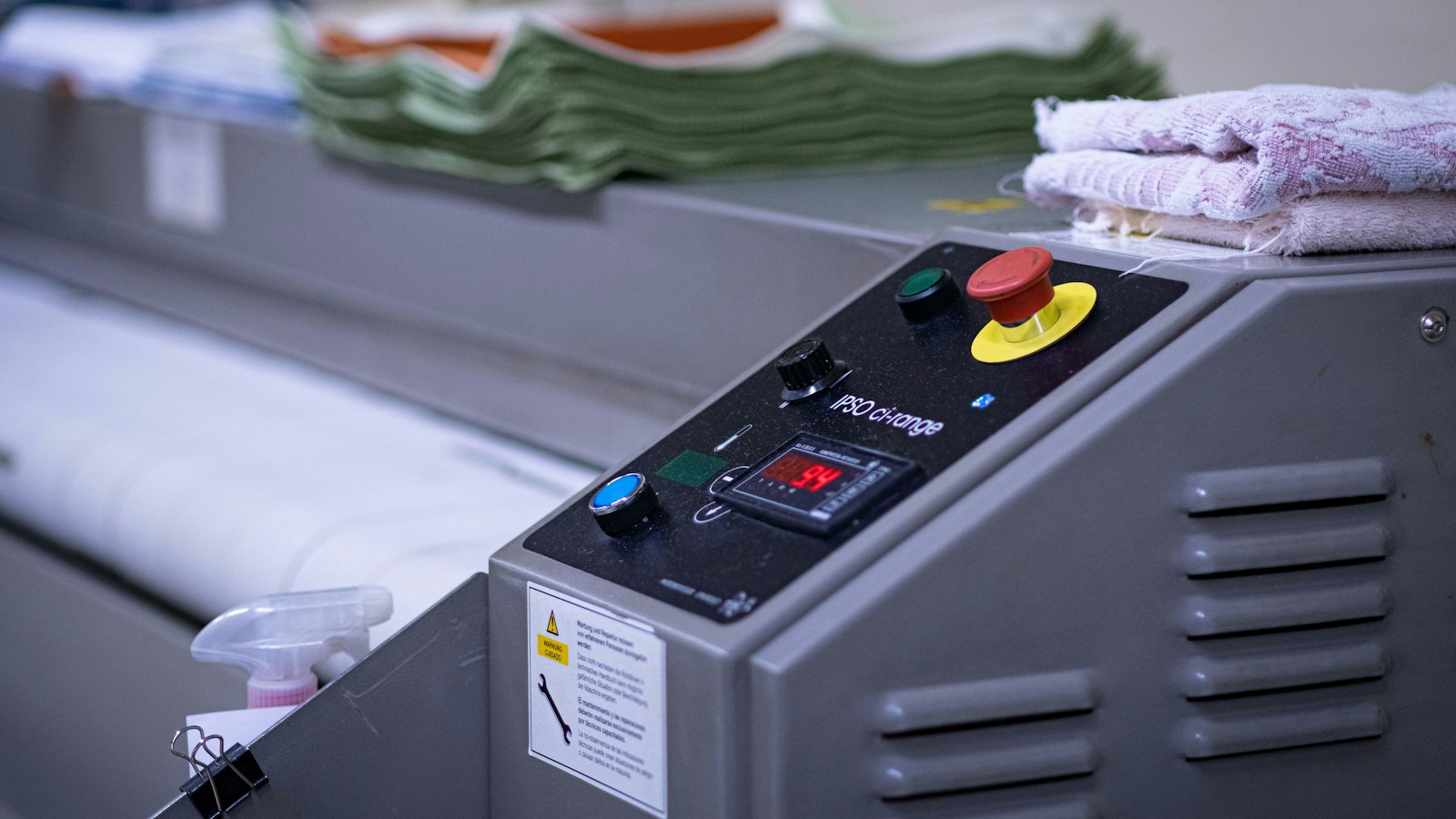
On an automatic, everything above applies plus the pneumatics and the control system. Run it. Listen for air leaks, check every station indexes cleanly, and confirm the control board still has software support — an automatic with a dead controller and no replacement available is scrap, whatever condition the frame is in.
If you are moving up to an automatic, the volume threshold matters more than the price: the case for one starts around 300 pieces a day, and a cheap used automatic below that volume is still a machine sitting idle with a service bill attached.
Inspecting a dryer
Dryers are the most commonly underestimated purchase, because they look like a belt and a box. What matters is whether they can deliver the heat you need across the whole belt width, consistently.
Check the heating elements — all of them, individually, by measuring temperature across the belt rather than trusting the panel. A dryer that is 15 degrees cooler at one edge will undercure everything that passes down that side, and the failure appears at the customer after washing rather than in your shop.
Check belt condition and tracking, and confirm the belt can be replaced. Check the extraction, and confirm your unit can accommodate it. And be specific about capacity: a dryer sized for plastisol cannot run water-based ink, which needs around three minutes rather than one — buying a dryer without knowing which inks you will run is buying a constraint.
Inspecting an embroidery machine
Embroidery machines are precision equipment with a great many moving parts, and stitch count is the closest thing to mileage. Ask for it, and treat a machine that cannot report it with caution.
Run a real design before buying
- Stitch a dense fill and fine lettering, not the seller's demo design
- Watch for thread breaks clustering in the same place — a timing or hook issue
- Check every needle on a multi-head, not just one
- Confirm the trimmer works on every colour change
- Check hoops and frames are included and available to buy
- Ask what the last service was, and by whom
Stitch a design of your own on fabric of your own. A seller's demo design is chosen because the machine runs it well, which is exactly why it tells you nothing. The file you bring should be the kind of work you actually sell — if you do small lettering, bring small lettering, because that is what exposes a tired machine.
Parts and support come before price
This is the check that should happen before you negotiate, because it can end the conversation. Before agreeing anything, find out whether consumable and wear parts are still available, whether anyone will service the machine, and what a call-out costs.
An orphaned machine — manufacturer gone, no parts, no technician within a day's travel — is not a bargain at any price. It runs beautifully until the day it does not, and then it occupies floor space while you buy its replacement anyway.
| Check before you negotiate | Why |
|---|---|
| Manufacturer still trading | Parts, software, documentation |
| Wear parts available | Squeegees, belts, hooks, platens |
| A technician within reach | Downtime is the real cost |
| Software still supported | Automatics and embroidery especially |
| Manuals obtainable | You will need them |
Budget for moving it
The purchase price is not the cost. An automatic press or a conveyor dryer is heavy, awkward and frequently needs specialist rigging to get out of one building and into another. Add transport, add a lifting crew at both ends, and add installation and calibration on arrival.
Then check your own building honestly. Doorway widths, floor loading, ceiling height, three-phase power, and extraction for a dryer. Every one of those has stopped a machine on the pavement outside a unit it could not enter, and none of them is expensive to check in advance.
Ask the seller how it was installed originally and what it took. A machine that came in before a wall was built is a machine that may not come out the way it went in.
What should you simply walk away from?
A digital printer that has been sitting. This is the clearest rule in used equipment. Inkjet printheads clog when unused, replacement heads are a large share of a machine's value, and a DTG printer that has been idle for months may need a head before it prints anything. Unless you can watch it produce a clean nozzle check and a full-coverage print, treat the price as if the head is dead — and if that arithmetic still works, buy it knowingly.
Anything you cannot see running. Photographs and a description are not evidence. If a seller cannot power it up, either they cannot or they will not, and both are answers.
A machine with no serial number or unclear ownership. Rare, and worth being firm about.
Anything where the saving is small. If used is only fifteen per cent below new, the warranty, the support and the known history on a new machine are worth the difference. Used equipment earns its place when the discount is real.
Whatever you buy, run the same arithmetic you would on a new machine — fixed monthly costs divided by realistic volume, plus the variable per print — with rigging and any immediate repairs included in the fixed side. A cheap machine at low volume is still expensive per print, and that is the number that decides whether it was a bargain. The rest of the equipment archive assumes you saw it running before you paid.